REVIEW · PROVIDENCIALES
3 hours Private Kiteboarding Beginner Lesson
Book on Viator →Operated by Turks and Caicos Kiteboarding · Bookable on Viator
Learning to kiteboard can feel unreal. In Providenciales’ Long Bay you get a private beginner lesson built around shallow, turquoise water and jet ski backup, so you can start controlling the kite and often see real progress quickly, with instructors like Wes known for being patient. The big catch: at $600 per person, it’s not a bargain, and your exact lesson time depends on wind and tide conditions.
Expect a smart 3-hour flow: about 30 minutes on the beach learning wind basics and kite setup, then roughly 2.5 hours practicing in the warm water close to shore. You’ll meet at Turks and Caicos Kiteboarding School on Long Bay Beach, TKCA 1ZZ, and you should come with a moderate fitness level since you’ll be moving around in the water and handling gear.
In This Review
- Key points at a glance
- Long Bay’s shallow water is the real cheat code for beginners
- Your 3-hour private beginner lesson: what happens when
- Beach time: wind theory and kite setup that actually sticks
- Shallow-water practice: control first, power second
- Getting on the board: first rides without heroics
- Safety support: jet skis that help you stay in the learning zone
- Gear and what to wear: show up ready, not stressed
- Price and value: is $600 per person worth it?
- Who this lesson is best for (and who should rethink it)
- Timing in Turks and Caicos: wind, tide, and why your day may shift
- What to do before you go so you progress fast
- Should you book this private beginner kiteboarding lesson?
- FAQ
- How long is the private beginner kiteboarding lesson?
- Where does the lesson start and end?
- Is the lesson private?
- What should I wear?
- Is equipment included?
- How much does the lesson cost?
- Are food and water included?
- What is the confirmation timeline?
- What happens if weather conditions aren’t right?
- What is the cancellation window?
Key points at a glance
- Long Bay shallow water training zone: learning is faster because the water stays easy to manage.
- Private lesson, not a crowd: only your group goes out, with your instructor right there.
- Beach-to-water progression: wind theory and kite setup first, then control practice for board readiness.
- Jet ski support for safety and efficiency: they can bring you upwind and away from shore.
- Gear provided: you show up in swimwear and sunscreen (rashguard also helps).
- Flexible timing based on conditions: lesson times shift with wind and tide.
Long Bay’s shallow water is the real cheat code for beginners
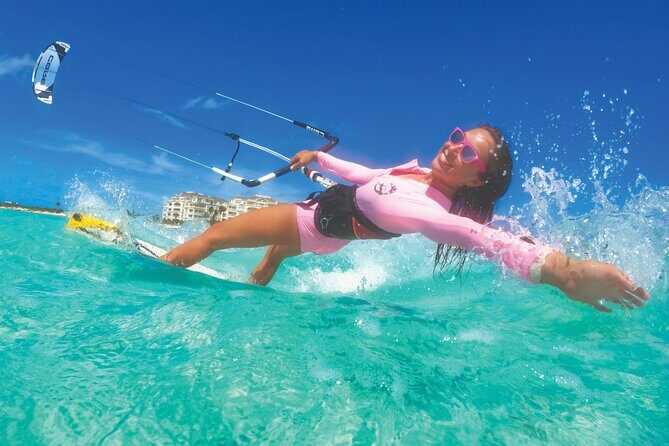
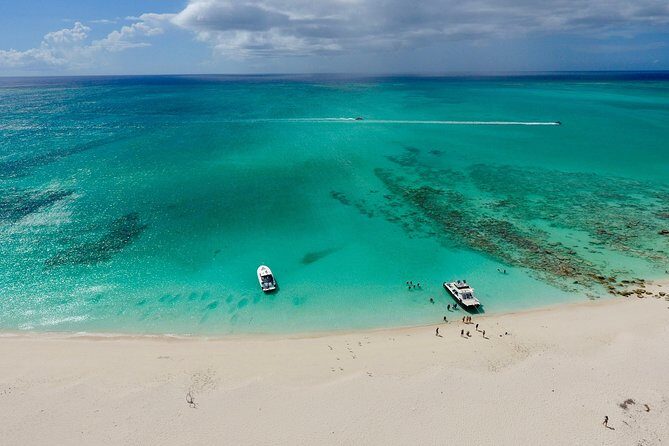
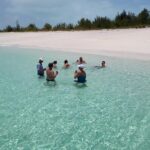
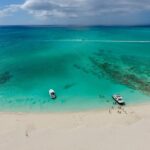
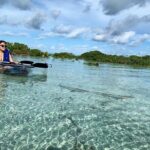
Providenciales is famous for postcard water, but for kiteboarding beginners the real advantage is the learning area at Long Bay. The shallow, turquoise shallows let you practice without the panic of deep water and far-away recovery. That matters because kiteboarding is basically a sport of timing and control. If the water makes you feel secure, you can focus on steering, body position, and kite power instead of fear.
This lesson is built around that idea: practice control where you can stand, reset quickly, and try again. That setup is why people leave the first session feeling like they actually learned something, not just watched someone else kiteboard.
Other private tours in Providenciales


Your 3-hour private beginner lesson: what happens when
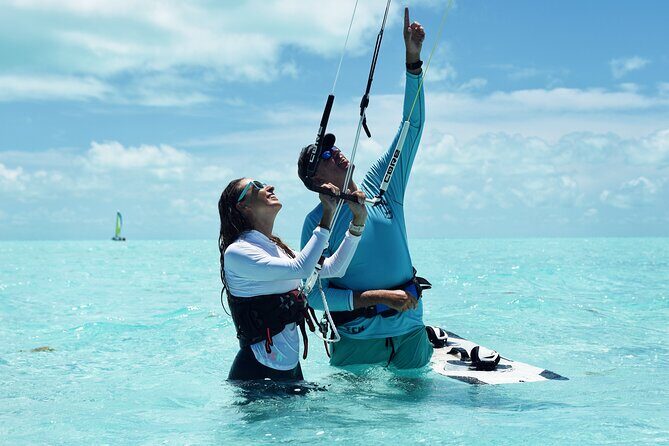
This is a private 3-hour beginner lesson with equipment provided. You’ll start and end back at Turks and Caicos Kiteboarding School on Long Bay Beach (TKCA 1ZZ). Lesson times run daily from 7:30 AM to 7:30 PM, but your exact start time changes based on wind and tides.
Here’s the structure you should expect:
- First ~20–30 minutes on the beach: safety rules, wind theory, and basic kite setup.
- Next ~2.5 hours in the water: shallow-water kite control practice with the instructor actively coaching you.
- Getting on the board: you’ll work toward your first rides during the same session, not as a separate “later step.”
The promise here is practical: learn the basics, then get enough control to stand a real chance of riding in one outing. Some students report getting up in about an hour, which is exactly why the time allocation matters—there’s enough seat time to make progress, not just theory and a few demos.
Beach time: wind theory and kite setup that actually sticks
The beach portion is short on purpose. Kiteboarding learning isn’t helped by a long lecture when your hands need to feel the kite and your eyes need to track wind. You’ll spend about the first half hour on wind basics and safety, then move into basic kite setup.
What I like about this approach is that it front-loads the stuff that prevents common beginner mistakes:
- how the kite pulls you (and why wind direction matters)
- how to control power so you aren’t getting yanked
- how to stay safe while you’re learning near other equipment and lines
You’ll also be given clear instruction for what to do next. That’s important because kite setup is one of those steps that feels confusing until someone walks you through it in real time.
Shallow-water practice: control first, power second
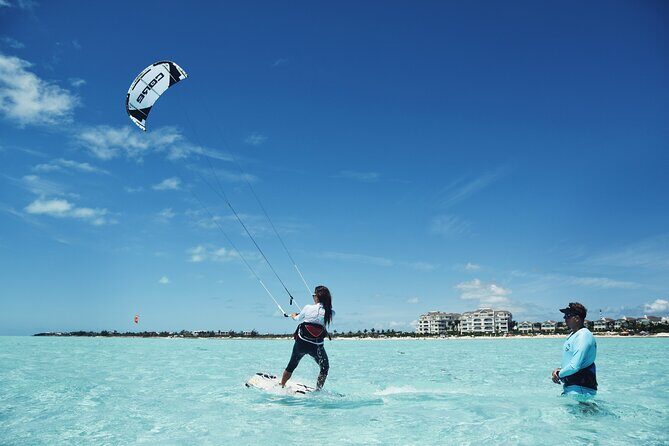
The “wow” part for beginners often sounds like getting on the board. But the real win comes earlier: kite control. In this lesson, most of your time is spent in the warm shallow waters off Long Bay, practicing how to steer the kite and manage its pull.
Here’s why that order works:
- Kite control is the foundation of balance.
- Shallow water reduces the risk while you learn resets and re-launching moves.
- You get repeated attempts without burning the whole day.
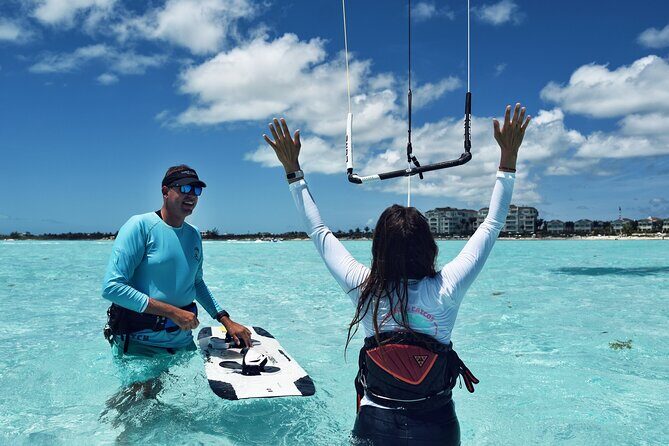
Your instructor stays with you the entire time, giving feedback as you move. That constant coaching is one of the biggest differences between a lesson and trying to learn from a friend who’s still learning too.
And because kiteboarding is a “messy at first” sport, you’ll likely have moments where you feel powered up too much or not enough. The upside of the shallow learning zone is you can recover and keep trying.
Getting on the board: first rides without heroics
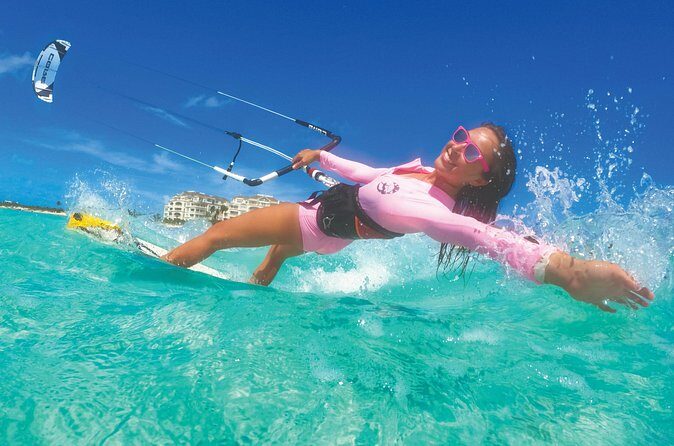
The lesson is designed so you don’t just master the theory and call it a day. After practicing kite control in the water, you’ll work toward your first board rides. For many beginners, the transition from controlling the kite to standing on the board is the hardest mental shift.
What makes this lesson practical is that board progress happens after you build some kite timing. In other words, you’re not trying to do everything at once. You’re learning to:
1) manage kite angle and pull
2) coordinate your body to stay balanced
3) then translate that into a first glide
Some riders end up surprised at how fast they get moving. One person reported being up and riding in a little over an hour, and multiple accounts describe getting up by the end of the private lesson. That doesn’t mean it’s instant for every body or every wind window. But the lesson design gives you the best chance for that outcome.
A few more Providenciales tours and experiences worth a look
Safety support: jet skis that help you stay in the learning zone
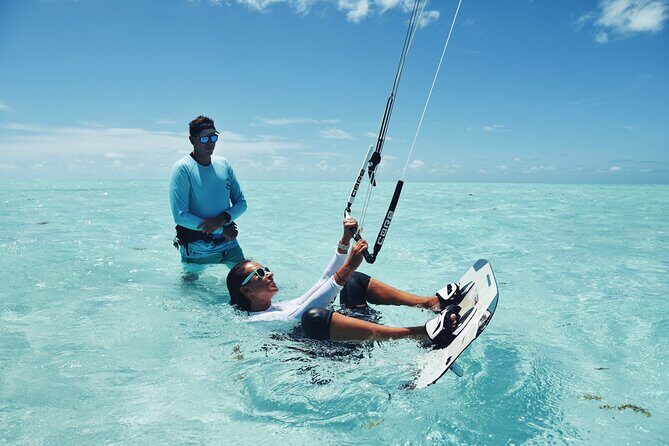
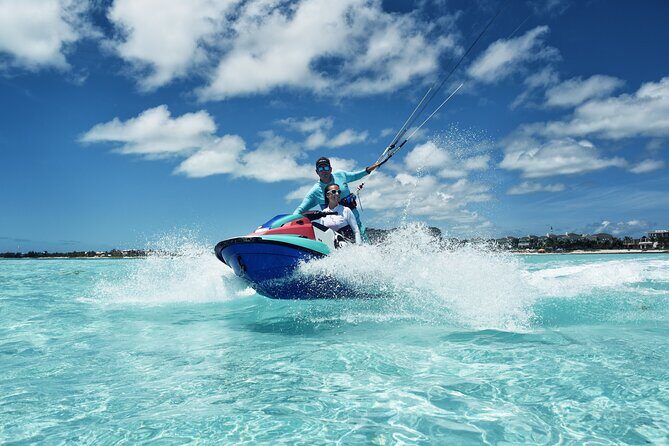
Jet ski assistance is a key part of how this lesson protects beginners and saves time. The point isn’t just safety—it’s also keeping you where learning happens.
Jet ski support is used to help bring students upwind and away from shore. That means less time stuck in frustrating positions and more time practicing the skills you came for. You should also feel more confident because help is available if something goes sideways.
Equipment is described as professional and safe by past students, and the instructors keep things organized so you’re not wandering around on your own trying to figure out what to do next.
Gear and what to wear: show up ready, not stressed
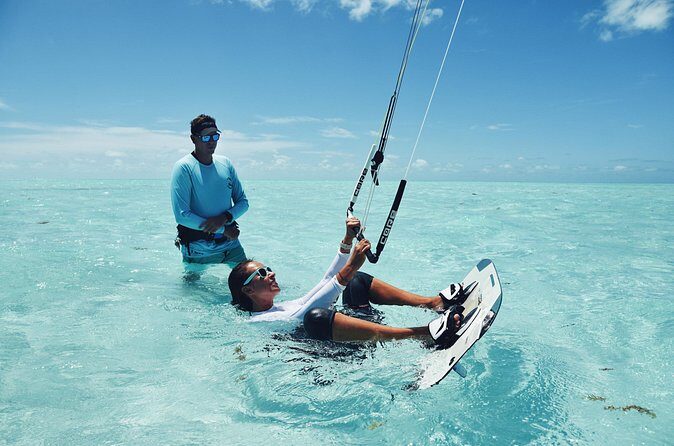
You don’t need to bring kiteboarding gear. Equipment needed for the lesson is included, which is a big part of the value. The course is specifically designed for beginners, so you’re not paying to hunt down gear or borrow the wrong sizes.
What you should bring:
- swimsuit (or a rashguard if you have one)
- sunscreen
That’s it on the clothing side. Water shoes can be useful for comfort, but only bring what you already own and are confident using in shallow water. The main goal is simple: stay comfortable so you can focus on kite control instead of adjusting everything every five minutes.
Also keep in mind the workout reality. You’ll be moving around and handling lines and equipment in the water. “Moderate physical fitness” is the phrase used for a reason.
Price and value: is $600 per person worth it?
Let’s talk money in plain terms. At $600 per person for a 3-hour private beginner session, this is a premium activity. If you compare it to group lessons back on a budget spreadsheet, it’ll look expensive.
But private lessons aren’t just about “not sharing.” You’re buying:
- more time with your instructor
- faster correction when you mess up a technique
- a structured beach-to-water progression built for beginners
And you’re getting equipment and the benefit of jet ski support that keeps the learning flow moving. The lesson also includes 12% tourism tax, which reduces surprise costs later.
If you’re the type who learns faster with hands-on coaching, this price starts making sense. If you’re mostly curious and want a casual try with minimal effort, you might prefer a cheaper group intro. For true beginners aiming for their first rides during the vacation, the lesson design is what you’re paying for—and it’s why the ratings are so strong.
Who this lesson is best for (and who should rethink it)
This lesson fits best if:
- you’re a first-timer who wants direct coaching
- you want maximum time on the water rather than watching from the beach
- you’re comfortable swimming and handling water-based activity
- you want a private experience for a birthday, anniversary, or “do something different” day
It may not fit as well if:
- you hate water movement or feel uncertain in the shallows
- you need a perfectly fixed schedule regardless of weather
- you’re unwilling to pay for safety support and gear included
A nice touch: lessons can be arranged for groups of 2–3 students per instructor, but the default experience here is private, so your group gets the instructor’s full attention.
Timing in Turks and Caicos: wind, tide, and why your day may shift
Lesson times vary daily based on conditions and tides. Kiteboarding is weather-driven, so don’t plan your whole vacation day around a rigid start time. Build in flexibility.
The good news is the schedule window is wide—operations run from 7:30 AM to 7:30 PM—so there’s usually a workable slot. When conditions are weak, rescheduling is part of the reality. You’re booking a sport that depends on wind, and the lesson is designed around that.
A practical tip: plan for this to be a “main event” in your day. If you stack it back-to-back with other active plans, you might feel rushed if your lesson shifts.
What to do before you go so you progress fast
You can’t control wind speed, but you can control your readiness. If you want to get the most out of the lesson, do these simple things:
- Use sunscreen early and reapply once you’re back on land.
- Choose swimwear that doesn’t twist or slip when you’re moving in the water.
- Be mentally ready for repetition. Kite control takes tries.
- Listen closely during the beach safety and wind portion. Those rules save you from the same mistakes.
Past students also highlight how patient and friendly instructors can be, especially during the messy early learning moments. Names that come up often include Wes, and Sarah and Hunter appear as part of the team. That kind of calm instruction is a big deal when your first goal is to stay comfortable and learn.
If your birthday or anniversary is the occasion, this lesson can turn into a memorable story quickly—one rider described it as a best-ever birthday present.
Should you book this private beginner kiteboarding lesson?
Book it if you want the best odds of getting real kiteboarding skills in a single session, with private instruction and jet ski support in a place built for beginner learning. The shallow water at Long Bay is the secret weapon, and the lesson flow is designed to get you from wind theory to first board rides without dragging the learning process out.
Skip it (or rethink the plan) if you’re budget-first, not comfortable with water movement, or you can’t handle schedule changes tied to wind and tide. At $600 per person, you’re paying for a premium setup—gear, coaching time, and safety support—so it’s worth it when you show up ready to learn.
If you want a vacation day that feels genuinely different from the usual beach-and-snorkel routine, this one has the structure to turn your curiosity into control. And that’s the kind of souvenir you can’t buy in a shop.
FAQ
How long is the private beginner kiteboarding lesson?
The lesson is about 3 hours total.
Where does the lesson start and end?
It starts at Turks and Caicos Kiteboarding School on Long Bay Beach (TKCA 1ZZ) and ends back at the same meeting point.
Is the lesson private?
Yes. It’s a private tour/activity, and only your group participates.
What should I wear?
Wear a swimsuit and sunscreen. A rashguard is also an option.
Is equipment included?
Yes. Equipment needed for the lesson is included.
How much does the lesson cost?
The price is $600.00 per person, and 12% tourism tax is included.
Are food and water included?
No. Food and water are not included.
What is the confirmation timeline?
Confirmation is received within 48 hours of booking, subject to availability.
What happens if weather conditions aren’t right?
This experience requires good weather. If it’s canceled due to poor weather, you’ll be offered a different date or a full refund.
What is the cancellation window?
You can cancel for a full refund if you cancel up to 24 hours in advance of the experience start time. If you cancel less than 24 hours before, the amount paid is not refunded.