REVIEW · PROVIDENCIALES
Fast-Track Kiteboarding Camp: Best for Beginners
Book on Viator →Operated by SUP Provo & Kite Provo · Bookable on Viator
Kiteboarding lessons can feel chaotic, not this one. In Providenciales, this fast-track camp is built for true beginners and aims to get you on the board during a tight 3-hour session. I love the semi-private format (two to three people) because it keeps you from getting lost in a big-group lesson. I also like that you get structured basics first, then real riding goals. A key drawback to plan for: you need low tide so you can stand and walk, and the exact time can shift day to day.
This is also one of those activities where logistics directly affect learning. When your instructor can coach your kite control step-by-step, you spend less time guessing and more time progressing. The camp runs through beach setup, kite handling in the water, safety systems, and finally waterstarts, all with jet ski support in the background.
If you’re thinking of taking this on vacation, the timing matters just as much as the skill level. You’ll want to bring energy (snacks, water, sun protection) and be ready to work hard for a few hours, not just float around and watch.
In This Review
- Quick hits before you go
- A 3-hour fast-track to your first kiteboarding starts
- Who this semi-private beginner camp really fits
- Beach setup: gear, kite control, and getting safe fast
- From kite relaunch to body-surf basics
- Waterstarts: how they teach you to ride without guessing
- Jet-ski support and safety systems
- Price and value in Turks and Caicos
- Timing, low tide, and where to meet
- What to bring so you can focus on learning
- Should you book this fast-track kiteboarding camp?
- FAQ
- What is the duration of the kiteboarding camp?
- How many people are in the group?
- What are the age and weight minimums?
- Is equipment included?
- Does the lesson include instruction in kite control and safety?
- Is jet ski support included?
- Where is the meeting point?
- What should I bring?
- Does the lesson run at a fixed time each day?
- What if weather is poor?
Quick hits before you go
- Semi-private beginner coaching for two to three people, so you move faster than a group class
- All equipment included, plus instruction from a longtime local kite school
- Low-tide lesson windows because standing and walking are part of the training
- Structured progression from kite control to relaunch to your first waterstarts
- Jet ski support included, which helps you feel safer while you learn
- Max 3 travelers, so this stays focused instead of crowded
A 3-hour fast-track to your first kiteboarding starts
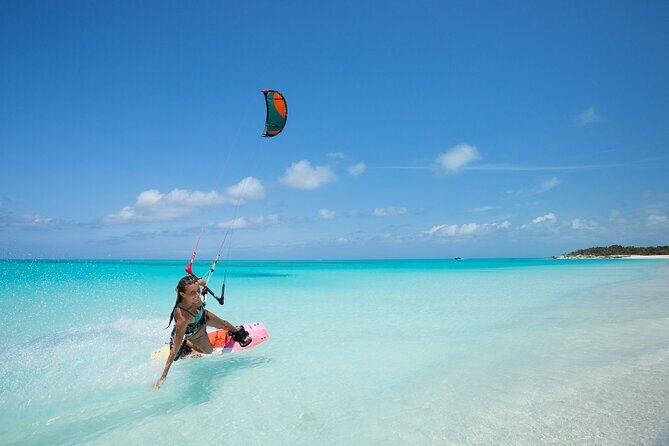
The goal here is simple: start from zero and leave with confident basics, not just a “someday” dream. The lesson is designed to take you from no skills to those first exciting starts on a board, all within about three hours. That’s not a typo. For most beginners, the biggest risk is wasting time. This camp tries to avoid that by keeping the teaching tight and the progression clear.
You’ll spend a lot of time working on core control—how to manage the kite, how to relaunch, and how to understand the power—before you’re asked to ride. That order is a smart one. Kiteboarding punishes sloppy control. But if you learn control first, the board suddenly feels like part of the system instead of a random plank you’re trying to balance on while being dragged by a sail.
This is also a “learn by doing” style lesson. You’re not just watching other people or getting one demo. You’ll do it: set up gear, control the kite in the water, practice safety steps, and then try waterstarts.
If you're still narrowing it down, here are other tours in Providenciales we've reviewed.
Who this semi-private beginner camp really fits
This camp is best when you’re genuinely at the start line. It’s marketed as a first kiteboarding lesson, and the flow reflects that. If you already have kite skills, you might find it too basic and faster learning opportunities may suit you better.
It’s also a great fit for families or pairs who want shared momentum. The group is small—two to three participants during the semi-private lesson, and the overall activity has a maximum of three travelers. In plain terms, it’s easier to get the one-on-one attention you actually need when you’re learning kite mechanics and safety.
Minimums matter here. The camp accepts participants age 10 and up, with a minimum weight of 80 lbs. If you’re close to either limit, I’d treat your body readiness seriously, because kiteboarding uses legs and bracing while you learn waterstarts.
From what I know about instructors in this sport, you’ll likely hear the kind of explanations that help you connect the dots: where power comes from, what your hands and stance should do, and why safety procedures aren’t optional. Some lessons may even be led by instructors you might recognize from past participants, such as Alan or Mike, who are both noted for going at a steady pace.
Beach setup: gear, kite control, and getting safe fast
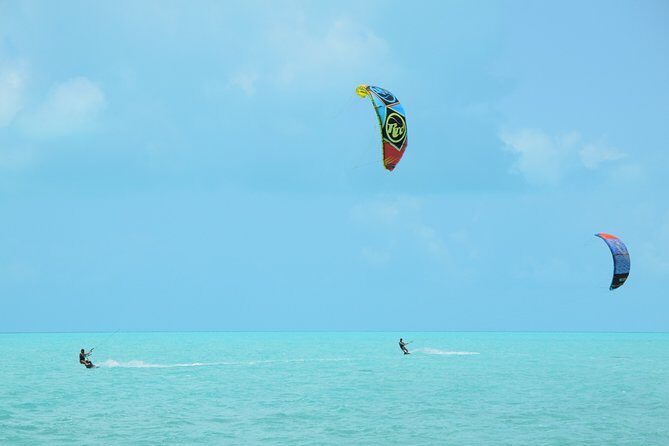
The lesson starts with beach work, and that’s where you build your foundation. You’ll use teaching aids right on the beach to speed up learning and reduce wasted time. That matters because kiteboarding is full of little “wait, what?” moments early on. The camp tries to remove those moments by giving you structured, visual guidance.
Then comes gear setup. You’ll learn how to set up all the equipment needed for the lesson, rather than hopping straight into the water with an assumption that you’ll figure it out. For beginners, that’s the difference between feeling in control and feeling flustered.
Next you practice kite control in the water. This part is the heart of why you sign up. Your instructor will help you learn how to manage the kite’s behavior and how to generate the right amount of power. Early on, power is the tricky part. If you under-control it, you stall. If you over-control it, you get dragged or lose your rhythm.
You’ll also cover safety systems early, which is reassuring. Kiteboarding is a sport with real momentum, so it helps to know how the system is supposed to behave when things don’t go perfectly.
From kite relaunch to body-surf basics
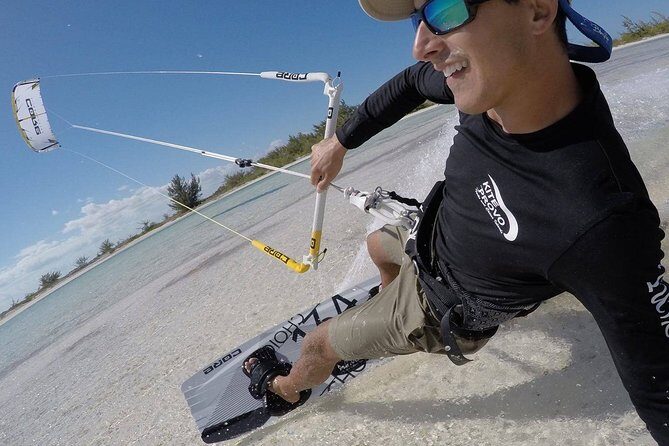
Relaunch training is where beginners often feel the biggest confidence shift. You learn how to relaunch the kite, which basically means learning how to bring the kite back under control after it has been out of position. That reduces fear because the water doesn’t feel like a dead end if something goes wrong.
Then you’ll practice body surfing. It’s not just random exercise. It helps you feel how you move through the water while connected to the kite system. It also helps build awareness of what your body does as the kite pulls and the board floats into the learning moment later.
This stage also reinforces the safety theme. Each skill builds on the previous one, so you’re not just collecting tricks. You’re learning how the kite, your body position, and your control inputs connect.
You’ll probably spend a good chunk of time on understanding the amount of power generated by the kite. For beginners, this is huge. Kite power isn’t constant. It changes with wind conditions and with your kite angle and line management. Learning the difference early makes your later waterstarts feel less like guesswork.
Waterstarts: how they teach you to ride without guessing
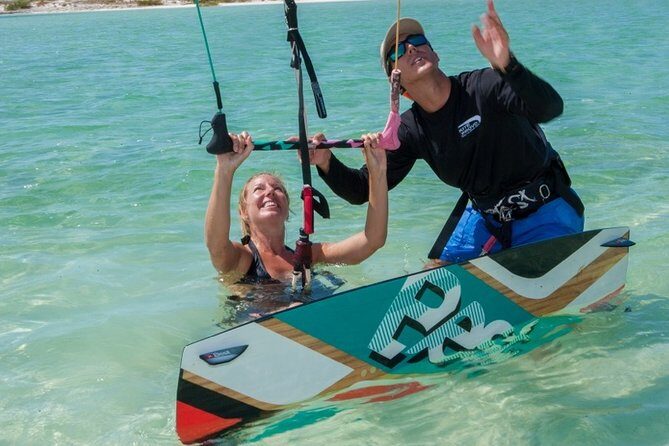
The lesson culminates in waterstarts, described as your first exciting starts on the board. A waterstart is where kiteboarding stops being purely about kite control and starts being about riding. But instead of throwing you into a chaotic try-and-fail session, the camp teaches the steps in a sequence.
To make waterstarts doable, the instructor will keep drilling your control until it becomes reliable. That typically means you’re practicing how to time the pull, how to position your body, and how to connect kite power to board movement.
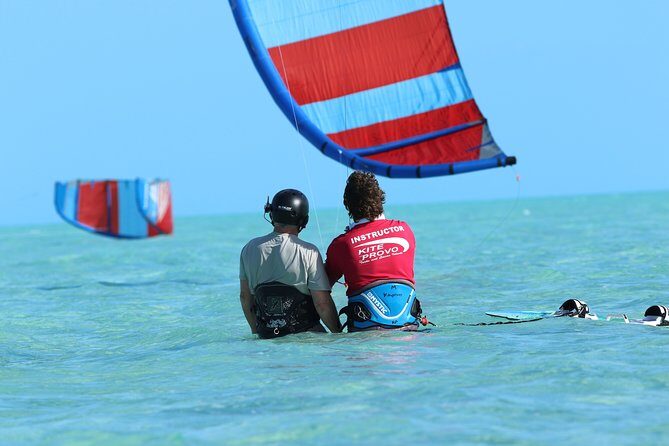
This is also where the small-group size helps. With only two or three students, your instructor can correct your stance and timing faster. In larger groups, you might watch for a while and then have limited turns. Here, you’re moving through the lesson as a team.
If you’re coming to Turks and Caicos specifically to try kiteboarding for the first time, this is the part you came for. The goal isn’t to become a freestyle rider in one session. The goal is to leave with a plan you can repeat, so your next session feels like progress instead of starting over.
Jet-ski support and safety systems
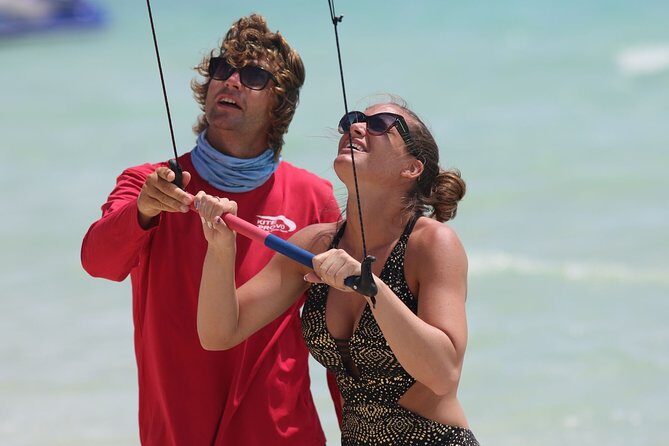
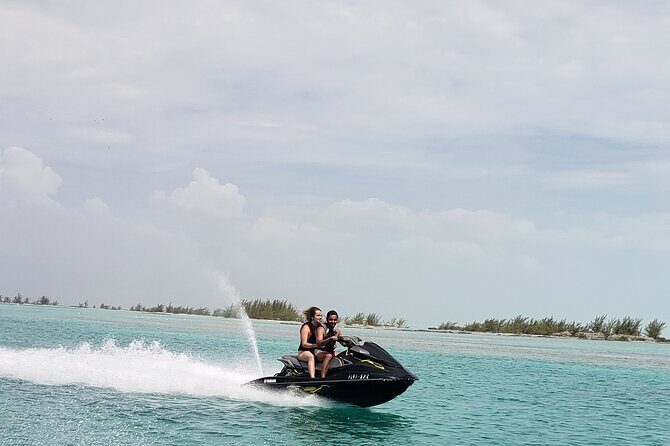
One detail I really appreciate: jet ski support is included. That doesn’t mean you’ll never get wet or never face a tricky moment. Learning a sport like this has rough edges. But having support nearby changes the feel of the lesson.
It also supports the instructor’s ability to coach in real time. When you have backup logistics, instructors can take teaching moments that would be harder in a more isolated setup.
Safety systems are also part of the lesson, not an afterthought. You’ll go through how to use all safety systems during training. For beginners, that matters because it turns fear into procedure. You’re not just hoping everything works. You’re learning how to respond if it doesn’t.
Price and value in Turks and Caicos
At $450 per person for about three hours, this isn’t cheap, but it’s also not a surprise fee-bomb. You get equipment and instruction included, and the price also includes 12% government taxes. That’s important because it means you’re not doing math at the last second to see what you actually owe.
Where this becomes good value is the focus. Beginners often burn money on lessons that don’t get them to the first real milestone quickly. This camp is built around accelerating learning: beach teaching aids, structured progression, and a small semi-private group so you can get feedback during your turns.
You’re also paying for the “all-in” feel—equipment, safety training, and jet ski support. Food and drinks aren’t included, and there’s no hotel pickup or drop-off. But if you’re staying locally and can get yourself to the meeting point, it’s a straightforward setup.
Finally, consider timing. The camp is popular, and it’s typically booked about 17 days in advance on average. Booking ahead can help you secure the day and time you want, rather than settling for whatever window remains.
Timing, low tide, and where to meet
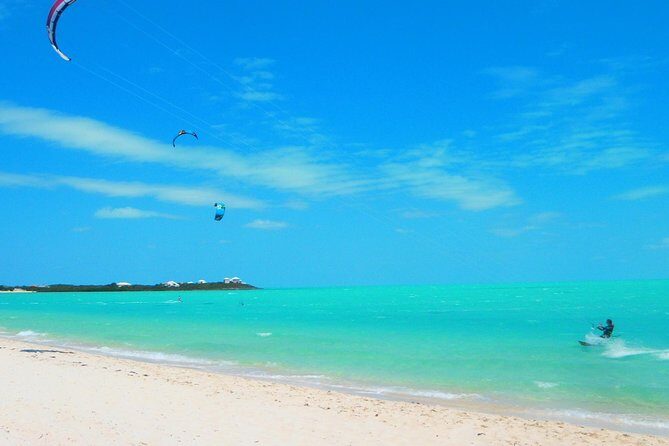
This is one of those lessons where nature sets the schedule. The exact start time changes day to day, and you’ll be messaged after you book. The lesson also must be at low tide so you can stand and walk. That detail affects what feels comfortable and safe during the early setup and initial moves.
Departures run through the day, and you get a choice of several departure times. The daily variation is normal in coastal sports, but it does mean you should keep your schedule flexible that morning or afternoon.
You’ll meet at Swaying Palms, Joe Wood Drive, Leeward Settlement, TKCA 1ZZ, Turks and Caicos Islands. The activity ends back at the same meeting point.
Hours are listed as Monday through Saturday, 8:00 AM to 6:00 PM for the stated periods. Practically, that means you can usually plan around a day-time window, as long as the low-tide requirement lines up.
What to bring so you can focus on learning
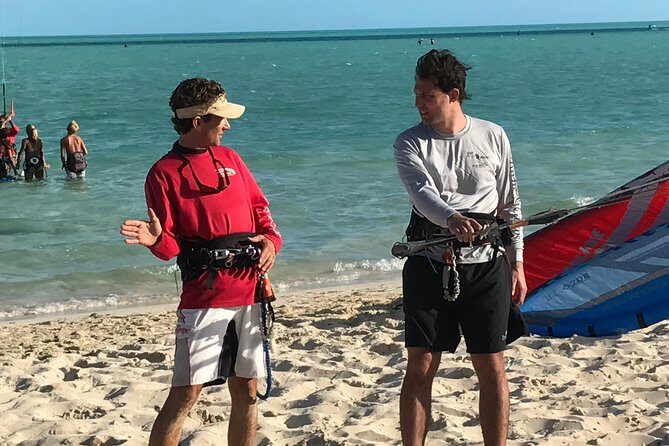
The camp gives you the gear and teaches you how to use it, but you’ll still want to bring the right comfort items so you can concentrate.
Here’s what I’d pack based on the camp’s own guidance:
- Sun protection (sunscreen is a must)
- Inexpensive sunglasses with a strap (water and wind can steal them fast)
- Water to stay hydrated
- High-energy snacks, like a power bar, dried fruit, or nuts
- Water shoes/neoprene booties are optional; they’re usually not needed, but you can bring them if you’re concerned
Also think about your fitness level. You don’t need to be an athlete, but kiteboarding uses core and legs, especially for waterstarts. If you’re coming off a long travel day, build in rest first.
If you have service animal needs, the camp allows service animals.
Should you book this fast-track kiteboarding camp?
Book it if you want your first kiteboarding lesson to feel structured, safe, and goal-driven. The small-group setup (two to three people) plus the teaching order—beach control, kite handling, relaunch, safety systems, then waterstarts—makes it much more likely you’ll leave with real capability instead of just a story.
Skip it or reconsider if you need a lesson that works regardless of tide, or if you expect to be taught in a flexible “any time, any conditions” way. This camp depends on low tide and good weather, and that’s not optional.
If you’re on the fence, my advice is simple: if kiteboarding is on your bucket list and you’re a beginner, this is a strong way to start in Turks and Caicos without wasting a big chunk of your vacation figuring things out.
FAQ
What is the duration of the kiteboarding camp?
The lesson is about 3 hours (approx.).
How many people are in the group?
It’s a semi-private lesson with two to three people, and the activity maximum is 3 travelers.
What are the age and weight minimums?
The minimum age is 10 years, and the minimum weight is 80 lbs.
Is equipment included?
Yes. Equipment needed for the lesson is included.
Does the lesson include instruction in kite control and safety?
Yes. You’ll learn kite control in the water, how to relaunch the kite, and use of all safety systems.
Is jet ski support included?
Yes, jet ski support is included.
Where is the meeting point?
The meeting point is Swaying Palms, Joe Wood Drive, Leeward Settlement TKCA 1ZZ, Turks and Caicos Islands.
What should I bring?
Bring sun protection, water to stay hydrated, inexpensive strap sunglasses, and high-energy snacks. Water shoes or neoprene booties are optional.
Does the lesson run at a fixed time each day?
Times vary daily. Your exact time is messaged to you after you book, and it must be low tide so you can stand and walk.
What if weather is poor?
The experience requires good weather. If it’s canceled due to poor weather, you’ll be offered a different date or a full refund.